

From Abracadabra to Zombies | View All
Transcendental Meditation®
I will give you the word today [Nov. 16, 2005], and elaborate on it after a month or two, when I have produced the results. The word is that there is a program now involving one trillion dollars to eradicate world poverty and to establish permanent world peace. The project cost is one trillion dollars. --Maharishi
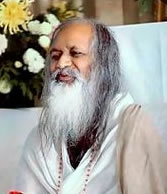 Transcendental Meditation® or TM® might
best be described as the meditation technique introduced to
the Western world by a man born in India on January 12, 1917, who was raised
in a Hindu family and given the name Mahesh Prasad Varma.*
He resided in the Netherlands at the time of his death in 2008, and was known as Maharishi Mahesh Yogi. He was dubbed the "giggling guru"
because of his habit of constantly giggling during television interviews.*
According to
Britannica, his organization, which includes real estate holdings,
schools, and clinics, was worth more than $3 billion in the late 1990s. A TM
supporter claims that the Maharishi was not the owner of the TM organization
and maintained no financial holdings. The
blogger may or may not be
editor Tom McKinley Ball,
a TM teacher who claims his blog is "independent." He notes that the TM
folks own real estate assets and property they plan to develop, but he
doesn't hazard a guess at its value.
Transcendental Meditation® or TM® might
best be described as the meditation technique introduced to
the Western world by a man born in India on January 12, 1917, who was raised
in a Hindu family and given the name Mahesh Prasad Varma.*
He resided in the Netherlands at the time of his death in 2008, and was known as Maharishi Mahesh Yogi. He was dubbed the "giggling guru"
because of his habit of constantly giggling during television interviews.*
According to
Britannica, his organization, which includes real estate holdings,
schools, and clinics, was worth more than $3 billion in the late 1990s. A TM
supporter claims that the Maharishi was not the owner of the TM organization
and maintained no financial holdings. The
blogger may or may not be
editor Tom McKinley Ball,
a TM teacher who claims his blog is "independent." He notes that the TM
folks own real estate assets and property they plan to develop, but he
doesn't hazard a guess at its value.
TM is said to bring the practitioner to a special state of consciousness often characterized as "enlightenment" or "bliss." The method involves entertaining a mantra. Trainees pay hundreds of dollars for their mantras. Novices may be led to believe that their mantra is unique, though many practitioners will share the same mantra. In April, 2007, the cost for TM training was $2,500. In July 2010, the cost had dropped to $1,500 for adults and half that for full-time students. In February 2015, the cost was $960 for adults and $360 for students. Financing is available.*
TM is a non-profit spiritual organization whose proprietors claim it is a program that its health benefits have been scientifically validated. But there are problems with TM research and validation. Others have exposed these problems, so I will only mention that little if any of the research tries to disprove a hypothesis, as good science requires, and most of the research has been done by TM advocates rather than independent investigators. There are no long term studies that examine the long-term effects of TM.* Also, at least one study has found negative health effects from meditation:
Abstract: This article reviews 75 scientific selected articles in the field of meditation, including Transcendental Meditation among others. It summarizes definitions of meditation, psychological and physiological changes, and negative side-effects encountered by 62.9% of meditators studied. While the authors did not restrict their study to TM, the side-effects reported were similar to those found in the "German Study" of Transcendental Meditators: relaxation-induced anxiety and panic; paradoxical increases in tension; less motivation in life; boredom; pain; impaired reality testing; confusion and disorientation; feeling 'spaced out'; depression; increased negativity; being more judgmental; feeling addicted to meditation; uncomfortable kinaesthetic sensations; mild dissociation; feelings of guilt; psychosis-like symptoms; grandiosity; elation; destructive behavior; suicidal feelings; defenselessness; fear; anger; apprehension; and despair. (Alberto Perez-De-Abeniz and Jeremy Holmes. Meditation: Concepts, Effects and Uses in Therapy. International Journal of Psychotherapy, March 2000, Vol. 5 Issue 1, p49, 10p.)
One should consider, however, that it is possible that the population seeking to remove stress from their lives by trying meditation may have serious psychological problems that meditation does not address. I think the strongest conclusion we should draw from such studies as the Perez -De-Abeniz and Holmes study is that meditation is not for everyone.
The TM movement began in 1956 in India and is now worldwide, claiming millions of followers. Meditation, of course, has been practiced in India for centuries. Many know of TM because of the Beatles and other celebrities like Mia Farrow and Donovan, who hung out at Mahesh's ashram in the 1960s and '70s. It may be that the Beatles found that money and fame weren't all they're made out to be, and like many others they turned to the East for help in finding the happiness and fulfillment they couldn't get from fame and drugs. Many think meditation offers a way to a high higher than any drug and a power higher than all others, the power of self-control. It also has the pleasant side-effect of leaving one feeling relaxed and content, as long as one's guru isn't charging too much for the lessons, financially or psychologically.*
One of the main appeals of TM seems to be its claim to be a scientific means of overcoming stress. TM claims to be based on the "Science of Creative Intelligence," in which one may get a degree at the Maharishi University of Management (MUM, formerly Maharishi International University) in Fairfield, Iowa. MUM offers "a Full Range of Academic Disciplines for Successful Management of All Fields of Life." Maharishi Ayurveda sells a number of health and beauty products for those who want a perfect body to go with the perfect mind.
TM recruiting literature is full of charts and graphs demonstrating the wonders of TM. Things like metabolic rate, oxygen consumption rate, bodily production of carbon dioxide, hormone production, brain waves, etc. are measured and charted and graphically presented to suggest that TM really takes a person to a new state of consciousness. Some of the studies done by TM scientists simply show that some of the same physiological results you can achieve by relaxing completely are achievable by TM. Nevertheless, according to TM advocates, tests have shown that TM produces "neurophysiological signatures that are distinctly different from relaxation and rest "[Judy Stein, personal correspondence]. Critics disagree.* The particular value of these physiological changes one can achieve by meditation have not been shown to be unique to transcendental meditation.
Probably the least believable claim of TMers is that they can fly—well, not really fly, more like hop. TM loudly promoted levitation in its early days.* Television news programs featured clips of TMers hopping around in the lotus position, claiming to be hovering. Apparently, this claim was too easily disproved and now TMers do not claim to be able to fly or hover, but say they believe that they can advance so that someday in the future they will be able to truly levitate and gain other super powers (sidhis) as have many holy ones before them.
One of the demonstrable powers claimed by TM is the "Maharishi effect." According to TM scientists: "collective meditation causes changes in a fundamental, unified physical field, and...those changes radiate into society and affect all aspects of society for the better" (Barry Markovsky). James Randi writes in Flim-Flam! (pp. 99-100):
Early in October 1978, a Dr. Robert Rabinoff...addressed a small group at the University of Oregon. He is an assistant professor of physics at Maharishi International University [MIU]....Dr. Ray Hyman was there and was determined to press Rabinoff on the subject of levitation....
The audience perked up when Dr. Rabinoff preached the Maharishi Effect, claiming that any city in which one percent or more of the inhabitants are TMers becomes a haven from crime. This, he told the folks, was an established fact, "scientifically demonstrated." Fairfield, Iowa, home of MIU, is unique in that some 13 percent of the populace are heavy TMers!...The crime rate is so low, we are told, that the chief of police has now put several officers on part-time duty. Unemployment is nonexistent....[and] crops are growing beyond the most optimistic hopes. The automobile accident rate in Iowa is now the lowest in the United States! And TM is to be given total credit for all this, according to Dr. Rabinoff.
Randi checked with the Fairfield Police Dept, the Iowa Department of Agriculture, and the Department of Motor Vehicles and found that Rabinoff’s claims were not true (Randi 1982, 99-108). The chief of police told Randi that he was hiring more officers. However, a study of crime data for Fairfield and other small towns done by a TM supporter found a significantly lower rate of violent crime and property crime in Fairfield,* although one student did stab another to death on campus in 2004.* And MUM claims a decrease in crime in the Netherlands as TM increased during their World Peace Assemblies.*
Data supplied by the Department of Agriculture showed no increase in crop production. And data on car accidents, including fatal car accidents, did not support Rabinoff's claims. Finally, Job Services of Iowa reported that the amount of unemployment in Iowa varied at essentially the same rate as the U.S. in general. According to Randi, "Dr. Rabinoff described the sidhis program as a system that enables one to achieve 'whatever one desires'..." (p. 101).
Similar claims have been made by Dean Radin and other parapsychologists regarding what they call "field consciousness" or "global consciousness." Roger Nelson, for example, thinks that if enough people want good weather, they will get it:
Reunion and commencement activities at Princeton University, involving thousands of alumni, graduates, family and others, are held outdoors, and it is often remarked that they are almost always blessed with good weather. A comparison of the recorded rainfall in Princeton vs. nearby communities shows that there is significantly less rain, less often, in Princeton on those days with major outdoor activities. (“Wishing for Good Weather,” The Journal for Scientific Exploration Vol. 11, No. 1.)*
Radin believes that the outpouring of feeling shown while millions watched the funeral of Princess Diana caused random event generators to come to attention in an orderly fashion.* Maybe someday we'll bring about world peace just by getting enough people to think about it at the same time. My guess is that the effect will be about the same as it's been when millions have prayed for peace.
Not everybody who has gone through TM has come away a satisfied customer. One disgruntled former TMer is Patrick Ryan, a graduate of MUM and a practitioner of TM for ten years. He founded a support group for former members (TM-Ex). Some former members have posted their stories on TranceNet (now defunct). Ryan also claims TM is not simply a "harmless way to relax through meditation." He writes:
In its advertising, TM emphasizes the practical benefits of meditation - particularly the reduction of stress. TM promoters show videos of members from all walks of life testifying to its benefits. TM sales pitches are full of blood pressure charts, heart-rate graphs, and other clinical evidence of TM's effectiveness. Not mentioned is the fact that scientific tests show similar benefits can be obtained by listening to soothing music, or by performing basic relaxation exercises available in books costing a couple of dollars. After a TM student pays up to $400 and receives his own personal mantra to chant, he is told never to reveal it to another. Why? Because the same "unique" mantra has been given--on the basis of age--to thousands of people.*
What other relaxation program has a support group for ex-relaxers? The TM folks respond by claiming that there are many studies that prove TMing is more effective in many ways that listening to relaxing music or doing relaxation exercises.* Recently, a Mr. Lawson English informed me that it was time to revise this entry on TM because of many good things that TM is now doing or has been shown to affect. For example, Lawson writes:
TM research has been ongoing for 45 years. In 2013, the American Heart Association reviewed research on many forms of "alternate therapies" for hypertension. In their section on meditation, they said that TM was the only practice they could say that doctors could recommend to their patients as an adjuvant (secondary) therapy for high blood pressure, while all other forms of meditation failed to get a passing grade, pending further research [see summary on meditation, page 6]
Yes, the AHA says doctors "could recommend" TM as a secondary therapy for high blood pressure, but a passing grade doesn't seem to amount to much in this case. The paragraph before the one Lawson cites reads as follows:
The overall evidence supports that TM modestly lowers BP. It is not certain whether it is truly superior to other meditation techniques in terms of BP lowering because there are few head-to-head studies. As a result of the paucity of data, we are unable to recommend a specific method of practice when TM is used for the treatment of high BP. However, TM (or meditation techniques in general) does not appear to pose significant health risks. Additional and higher-quality studies are required to provide conclusions on the BP-lowering efficacy of meditation forms other than TM.
The AHA found only two, small studies on TM and blood pressure worth reviewing. I don't think that saying TM doesn't appear to pose a significant health risk is a very strong recommendation.
TM's political agenda
There have also been attempts to introduce TM into public schools. For example, The March 1, 1995, edition of the Sacramento Bee (p. B4) reports that John Black, director of a TM program in Palo Alto, California, tried to persuade officials in San Jose to let him teach TM in the schools. Meditation in the classroom, he claims, will increase test scores, reduce teenage pregnancies, rid campuses of violence and drugs, and diminish teacher burnout. This powerful message was delivered at a free forum for teachers and meditators titled "Solving the Crisis in Our Schools."
It may be true that people such as John Black really believe that TM can do all these things, but they do not have strong proof that TM in the schools will accomplish any of these noble goals. John Black says that "the crisis in the schools is that people are stressed out." He may be right, but it is doubtful that the claim is even intelligible. Wisely, school officials have remained unpersuaded. Even a newspaper ad in which Mahesh himself offered "A Proven Program to Eliminate Crime in San Jose" for a mere $55.8 million a year couldn't convince City Hall. Similar ads were placed in several major newspapers around the country. There were no takers.
Who said you can't trust City Hall?
The TM-in-schools program is still going strong, thanks to the David Lynch Foundation. (Lynch has been a TMer since 1973.) On his website, he says:
In 2005, we started the David Lynch Foundation for Consciousness-Based Education and World Peace to ensure that every child anywhere in the world who wanted to learn to meditate could do so. Now, the Foundation is actively teaching TM to adults and children in countries everywhere.
How are we able to do it? Because of the generosity of foundations and philanthropists and everyday people who want to ease the suffering of others—and who want to help create a better world.
Lawson English informed me that "the success of the project in the US can be seen by this 7-year retrospective on how schools in San Francisco that teach TM are doing." (See this NBC report. See also this report on the use of mindfulness meditation in Sacramento area schools.) Mr. English also informed me that the David Lynch Foundation has net assets of $2,763,392 and net revenue of $296,627. Its highest paid officers are John Hagelin ($42,000) and Bob Roth ($117,869). Mr. English even sent me a copy of the foundation's 990 form. "As you can see," he wrote, "the organization isn't super wealthy nor do the officers make wads of cash." As proof he sent me other 990 forms that show the Maharishi Foundation USA has net assets of $4,182,012 and net Revenue: $805,586 (highest paid officers: Robert Cohn $42,000; John Hagelin $30,000); the Global Country of World Peace has net assets of $48.6 million net revenue of -$1,985,695 (Highest paid officer: Robert Wynne $30,000).
TM also seems to be following the model of Scientology, which sends members to disaster sites around the world to do some form of energy healing (called an "assist") and perhaps a little recruiting. The David Lynch Foundation has sent TMers to Africa to teach meditation to those with PTSD. Two small studies, one using controls who did not meditate, done by TM researchers, indicate that meditation may help people with PTSD. "These findings suggest that TM may be an effective antidote to the rising incidence of PTSD in the world," said co-author Fred Travis, Ph.D., Director for the Center for Brain, Consciousness, and Cognition at Maharishi University of Management. It may be. Then again, it may not be any more effective than providing soothing massages or sharing ice cream cones and providing shelter to victims of war. In any case, one should compare the results of these studies with the more thorough evaluation of meditation programs that found mantra-based programs demonstrated no benefit: Meditation programs for psychological stress and well-being: A systematic review and meta-analysis. M. Goyal et al.. JAMA Internal Medicine, 2014.
See also Ayurvedic medicine and Deepak Chopra.
further reading
(note: all links below, except to reader comments, go offsite and are not the responsibility of Robert T. Carroll. I have no control over their content and, while I have no knowledge that any of these sites contain falsehoods, I cannot be held responsible for any factual errors that they may contain.)
books and articles
Blackmore, Susan (2003). Consciousness: An Introduction. Oxford University Press.
Gardner, Martin. "Doug Henning and the Giggling Guru," Skeptical Inquirer, May/Jun 1995.
Hassan, Steven. Combatting Cult Mind Control. Rochester, Vermont: Park Street Press, 1990.
West, M. (1987). (ed.) The Psychology of Meditation. Clarendon Press.
websites
Research Demonstrating Harmful Effects From TM
The Maharishi Caper: Or How to Hoodwink Top Medical Journals by Andrew A. Skolnick
Falling Down the TM Rabbit Hole, How TM Really Works, a Critical Opinion by Joseph W. Kellett
On Transcendental Meditation I: Nature Support
Maharishi Mahesh Yogi interviewed by Larry King - May 12, 2002
Lies My Guru Told Me (For my own good, of course) By Michael D. Coleman, Ph. D.
What is a cult? What is a sect?
Mahesh asks wealthy Americans to send him a billion dollars
Prayer, TM and African-Americans - Funk 17
Meditation Information Network
From NCAHF Consumer Health Digest: Researchers at Johns Hopkins University have reviewed whether meditation programs can improve anxiety, depression, mood, mental health-related quality of life, attention, substance abuse, eating habits, sleep, pain, and weight in adults. [Goyal M and others. Meditation programs for psychological stress and well-being: A systematic review and meta-analysis. JAMA Internal Medicine, 2014] After examining thousands of reports, the researchers found only 47 studies were sufficiently well-designed to be included in their meta-analysis, which concluded:
- Mindfulness meditation programs showed (a) moderate evidence of improved anxiety, depression, and pain, (b) low evidence of improved stress/distress and mental health-related quality of life, and (c) low evidence of no effect or insufficient evidence of any effect on positive mood, attention, substance use, eating habits, sleep, and weight.
- Mantra-based programs demonstrated no benefit.
- There was no evidence that meditation programs were better than drugs, exercise, and other behavioral therapies.
The published report did not consider the extent to which meditation is inappropriately recommended to people who would benefit much more from counseling or psychotherapy that helps them identify and deal with the causes of stress responsible for their symptoms.
**
Maharishi Mahesh Yogi's Nephew Arrested on Rape Charge
A nephew of transcendental meditation guru, the late Maharishi Mahesh Yogi, was arrested by the Madhya Pradesh Police for the alleged rape of a woman who had been employed in one of the schools run by the Maharishi Vidya Mandir group headed by the accused. The nephew, Girish Chandra Verma, has been managing all the educational trusts set up under the Maharishi. The trust includes as many as 148 schools spread across 16 states in India.
 traditional Chinese medicine