

From Abracadabra to Zombies | View All
Randi $1,000,000 paranormal challenge
Note: The JREF no longer accepts applications for the million dollar prize from members of the general public. Check the organization's website for any updates.
For nearly two decades James Randi and the James Randi Educational  Foundation offered
a one-million-dollar (US) prize to anyone who could show, "under proper observing
conditions, evidence of any paranormal, supernatural, or occult power." The rules
were little more than what any reasonable
scientist would require. If
you are a mental spoon bender, you couldn't use your own spoons. If
you claimed to see auras, you'd have to do so under controlled conditions. If you
claimed to be able to do
remote viewing, you wouldn't be given credit for coming close in
some vague way. If you were going to demonstrate dowsing
powers, you would have to be prepared to be tested under controlled conditions. If you
were going to do psychic surgery
or experience the stigmata, you would have to do
so with cameras watching your every move.
Foundation offered
a one-million-dollar (US) prize to anyone who could show, "under proper observing
conditions, evidence of any paranormal, supernatural, or occult power." The rules
were little more than what any reasonable
scientist would require. If
you are a mental spoon bender, you couldn't use your own spoons. If
you claimed to see auras, you'd have to do so under controlled conditions. If you
claimed to be able to do
remote viewing, you wouldn't be given credit for coming close in
some vague way. If you were going to demonstrate dowsing
powers, you would have to be prepared to be tested under controlled conditions. If you
were going to do psychic surgery
or experience the stigmata, you would have to do
so with cameras watching your every move.

In January 2007, Randi announced a major change in the rules:
As of April 1, 2007, we will require two major qualifications of all those who will be eligible. First, any applicant will be required to have a media profile. By that, we mean that there must be some media recognition – a television interview, a newspaper account, some press write-up, or a reference in a book, that provides details of the claimed abilities of the applicant....The second requirement will be that the applicant must provide an endorsement of an academic nature. That means some sort of validation from an appropriately-qualified academic....
Once these qualifications have been offered, we will follow up on them, asking for validation; we’ll require that the cited authorities verify that they did make such a statement about the applicant, or that they hold such an opinion, and that they still stand by that statement. Anecdotal material will not be accepted.
We may be prepared to possibly waive the requirement for a preliminary test as soon as these two qualifications have been validated. In such a case we will be prepared to move right into the second phase: the formal test.
Another major change in the million dollar challenge was that the JREF planned to:
regularly and officially highlight well-known persons in the field and challenge them directly by name. Those challenged will then have a six-month period during which they may respond; during that period the JREF will heavily publicize the fact that such a challenge has been issued, we will issue press releases on the matter, and we will be frequently asking that those challenged make a response. Tentatively, we will begin by formally challenging Uri Geller, James Van Praagh, Sylvia Browne, and John Edward, on April 1st.
In January 2008, the JREF announced that the offer of the million dollar prize will cease on March 6, 2010. However, the prize was still being offered under new conditions.
In the summer of 2015, the JREF announced that it was now "a grant making foundation." The announcement also said:
We plan on continuing the Million Dollar Challenge as a means for educating the public about paranormal claims.
Over the years, we have spent a great deal of time dealing with claims ranging from yet another dowsing claim to some VERY eccentric and untestable claims. The overwhelming majority refuse to fill out the application or even state a claim that can be tested. Some of them show up in person and demand to be tested while they wait. We can no longer justify the resources to interact with these people.
Effective immediately, JREF will no longer accept applications directly from people claiming to have a paranormal power. We will however offer our Challenge to anyone who has passed a preliminary test that meets with our approval. We will provide example protocols early next year [2016]. Of course, any established psychic may always contact JREF to be tested directly (preferably with an independent, third party TV crew.)
There are others offering prizes to anyone who can demonstrate psychic powers. After collecting the million dollars from Randi, successful psychics might go to India and contact B. Premanand who will pay Rs. 100,000 "to any person or persons who will demonstrate any psychic, supernatural of paranormal ability of any kind under satisfactory observing conditions." Also, "Prabir Ghosh at one time offered to pay Rs. 20,00,000* to anyone who claims to possess supernatural power of any kind and proves the same without resorting to any trick in the location specified by Prabir Ghosh."
The Australian Skeptics offer 100,000 A$ to anyone who can prove he or she has "extraordinary powers":
Since 1980, Australian Skeptics has issued a challenge to people who claim to have extraordinary powers, to demonstrate their ability under proper observing conditions. The first person to do so will receive a great deal of recognition and prestige as well as meeting the requirements for the awarding of A$100,000.
We make this offer because we are sincere about seeking out the truth of claims that might be described as paranormal or that confront accepted laws of science. We see many such claims made by professed psychics, healers, witnesses to paranormal events and those selling devices which do the apparently ‘improbable’ or even ‘impossible’ (ie defy scientific laws). If there really is a way to generate free energy or read minds, to communicate with extraterrestrials or to tell the future, we want to tell the world, and in our own way give the claimant proper recognition.
On the other hand, if a claim is proved to be unfounded or fraudulent, we would reserve the right to expose this situation so that clients do not waste their money and time on a product or service that fails (and can only ever fail) to deliver what is claimed for it.
In either case, we think the public deserves and has the right to know the truth. Consequently, the Skeptics’ Challenge is a genuine and serious undertaking, and the A$100,000 award a genuine offer.
The Belgian and European Skeptics offer 25,000 € to anyone who can prove they have paranormal or extraordinary powers. The prize is called the Sisyphus prize.
The Independent Investigations Group "offers a $100,000 prize to anyone who can show, under proper observing conditions, evidence of any paranormal, supernatural, or occult power or event."
The North Texas Skeptics offer $12,000 to any person who can demonstrate any psychic or paranormal power or ability under scientifically valid observing conditions.
The Quebec Skeptics offer 10,000 CDN$ to any astrologer who can demonstrate her craft according in a formal scientific experiment.
The Tampa Bay Skeptics offer $1,000 to anyone able to demonstrate any paranormal phenomenon under mutually agreed-upon observing conditions.
Conjurer Chris Angel once offered $1,000,000 of his own money to Uri Geller and Jim Callahan if they could psychically determine the contents of an envelope he held in his hand. The offer was in response to Callahan's claim that his performance of a trick on a TV show called "Phenomenon" was aided by spirit guide.
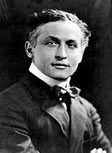 The offer of cash prizes as an incentive to so-called psychics to prove
their claims is not new. In 1922, Scientific American offered two $2,500
awards, one for the first person who could produce an authentic
spirit photograph under test
conditions and the other for the first medium to produce an authentic
"visible psychic manifestation" (Christopher 1975: 180). Houdini, the
foremost magician of the period, was a member
of the investigating committee. Nobody won the prizes. The first to
announce she was ready to be tested was Elizabeth Allen Tomson, but after
she was caught with twenty yards of gauze taped to her groin, flowers
under her breasts, and a snake in her arm pit, she was never formally
tested (Christopher 1975: 188). The honor of being the first medium tested
by the Scientific American team went to George Valiantine. He
didn't know that the chair he sat in during his séance in a completely
darkened room had been wired to light up a signal in an adjoining room
every time he left his seat. Oddly, phenomena such as a voice speaking
from a trumpet that floated about the room happened only at the exact
moments the signal lit up.
The offer of cash prizes as an incentive to so-called psychics to prove
their claims is not new. In 1922, Scientific American offered two $2,500
awards, one for the first person who could produce an authentic
spirit photograph under test
conditions and the other for the first medium to produce an authentic
"visible psychic manifestation" (Christopher 1975: 180). Houdini, the
foremost magician of the period, was a member
of the investigating committee. Nobody won the prizes. The first to
announce she was ready to be tested was Elizabeth Allen Tomson, but after
she was caught with twenty yards of gauze taped to her groin, flowers
under her breasts, and a snake in her arm pit, she was never formally
tested (Christopher 1975: 188). The honor of being the first medium tested
by the Scientific American team went to George Valiantine. He
didn't know that the chair he sat in during his séance in a completely
darkened room had been wired to light up a signal in an adjoining room
every time he left his seat. Oddly, phenomena such as a voice speaking
from a trumpet that floated about the room happened only at the exact
moments the signal lit up.
The Reverend Josie K. Stewart also failed to produce handwritten messages from the dead brought to her by her spirit guide Effie. The committee members marked their cards and she failed three times before declaring success at the fourth trial. But, since the messages she produced were not on the cards that had been supplied by the Scientific American committee, it was determined that she had tried to trick them! What a shock.
Another contestant, Nino Pecoraro, claimed to have Eusapia Palladino as his spirit guide. He was doing well fooling some of the committee members until Houdini showed up during a séance. Houdini took the sixty-foot long rope being used to tie up Pecoraro and cut it into many short pieces and tied up "the psychic's wrists, arms, legs, ankles, and torso." Houdini, the master escapologist, knew that "even a rank amateur could gain slack enough to release his hands and feet" when tied with a long rope (Christopher 1975: 191). The great Pecoraro couldn't perform that night.
The fifth applicant for the Scientific American prize was Mina Crandon, known in the occult world as "Margery." She didn't collect the prize, either. (For more on "Margery," see the entry on ectoplasm.)
In the 1930s, Hugo Gernsback offered a $6,000 prize for any astrologer who could accurately forecast three major events in one year. He never had to pay anyone a cent.
One would think that after more than 150 years of scientific testing of psychics, there would be at least one who could demonstrate a single psychic ability under test conditions. Parapsychologist Dean Radin claims the evidence for psychic phenomena is so strong that only bias and prejudice keep skeptics from accepting the reality of ESP or PK. Why doesn't he claim the million dollar prize, then? According to Radin:
for the types of psi effects observed in the laboratory, even a million dollar prize wouldn't cover the costs of conducting the required experiment. Assuming we'd need to show odds against chance of say 100 million to 1 to win a million dollar prize, when you calculate how many repeated trials, selected participants, multiple experimenters, and skeptical observers are necessary to achieve this outcome, the combined costs turn out to be more than the prize. So, from a purely pragmatic perspective, the various prizes offered so far aren't sufficiently enticing. (Radin 2006: 291)
The fact is that most parapsychologists have given up trying to find a single person with a single paranormal ability. They study groups of people and collect gobs of data, hoping to find a statistic not likely due to chance, which they then declare to be evidence of psi because it is their hypothesis that if the statistic is not likely due to chance then it is reasonable to conclude that it is due to psi. In other words, they've gone from being duped by con artists to duping themselves.
Wikipedia lists prizes being offered to those who can prove they have paranormal powers.
Below is a video clip of Randi exposing Geller and Popoff from NOVA's "Secrets of the Psychics."
Next is a video of Randi at TED in 2007.
further reading
books
Christopher, Milbourne. (1975). Mediums, Mystics & the Occult. Thomas Y. Crowell Co.
websites
Australian journalist Paul Willis of the CorreX Files interviews Randi (The site is now known as the Correx Archive due to legal threats from 20th Century Fox Alien Network for unauthorized usurpation of a bona fide trademark.)
The search for Margery - Notes on a Strange World - medium associated with Houdini by Massimo Polidoro
The Independent Investigations Group video: testing psychics for money
Books by James Randi
Randi, James. The Faith Healers (Buffalo, N.Y.: Prometheus Books, 1987).
Randi, James. The Mask of Nostradamus (New York: Scribner, 1990).
Randi, James. The Truth About Uri Geller (Buffalo, NY: Prometheus Books, 1982).
news stories
Randi's TAM 7 Welcome Address (Randi is recovering from surgery and will undergo chemotherapy, but it did not stop him from being a major force, as usual, at the annual rationality festival in Las Vegas known as TAM.)

 Ramtha